Follow the light. Keep the evidence.
Loading the working result and its lighting components.
Artistic direction, not a photograph or renderer output. Camera composition and geology can differ.
Target provenanceBreak the image into its causes.
Inspect these live with the renderer's lighting selector. Each saved contribution uses the beauty exposure; dark indirect-light images remain dark. Tone-mapped component pixels cannot be added to reconstruct the final image.
What does each contribution change?
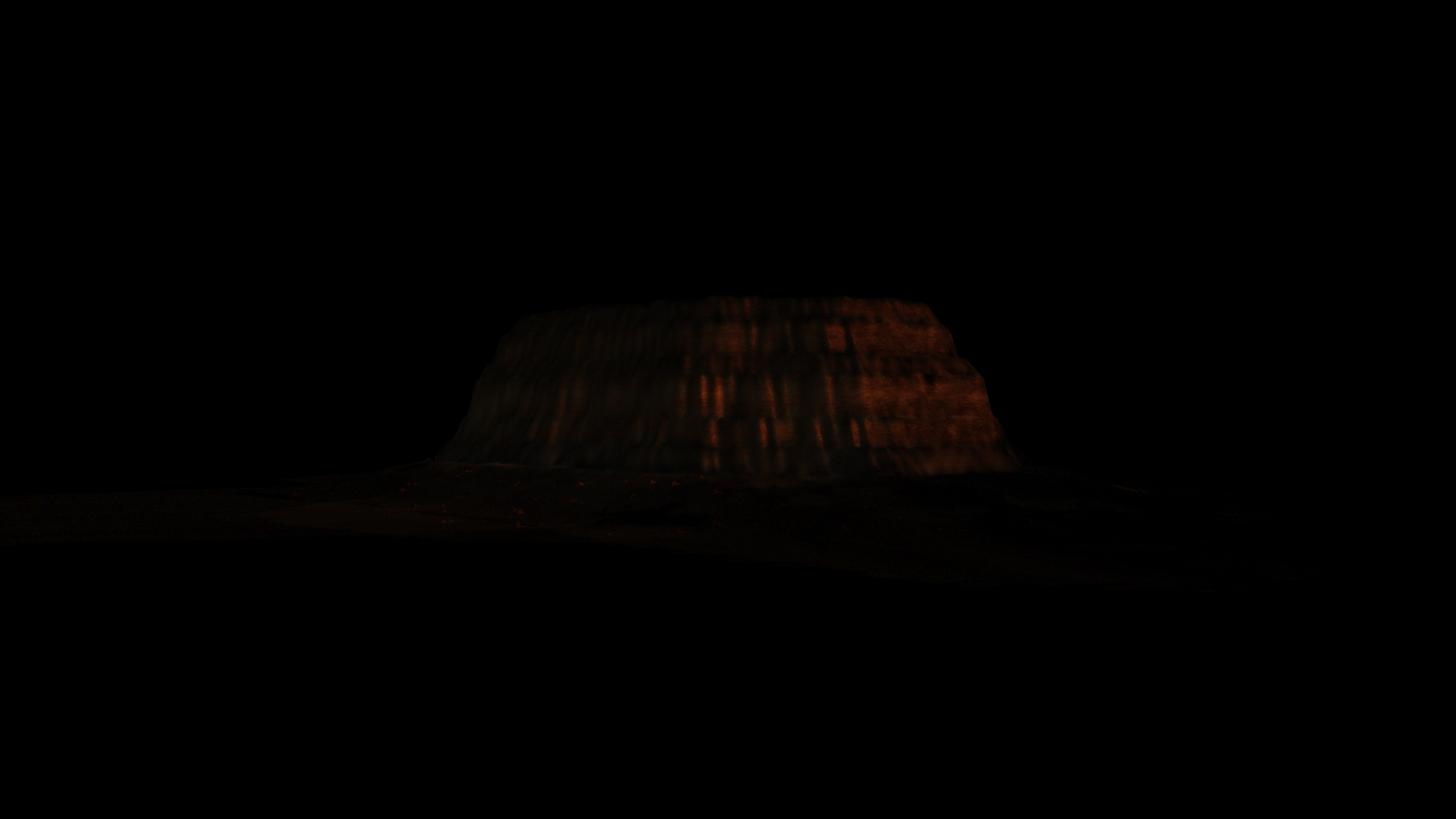
Bounce contribution difference, amplified 6× — a display-space difference visualization, not a separate renderer output.
Material and geometry trials
The fal PBR candidates were generated from descriptive text. No reference image was transmitted. They are estimated materials, not measured scans. The default retains the scanned-surface version after comparison.
Rejected structural changes
Measured cost and remaining limits
Lighting, cache and frame-pacing evidence · Component methods and next acceptance gates
All parameter trials and saved search reports
Two coordinate-search rounds per branch vary exposure, surface reflectance, material saturation, sky contribution and local air density. Improvements smaller than 0.0002 color-distance units are not retained. Numerical matching guides broad tone only; structural and photographic decisions require visual review.
| Candidate | Color distance | Main GPU pass | Search decision | Capture |
|---|